


Analytics 101: The Metrics That Tell You If Marketing Is Working
A Gartner survey found that 84% of companies are stuck in a brand "doom loop" where weak measurement leads to unclear impact, rising skepticism, and tighter budgets. You've probably felt this if you've ever stared at your analytics dashboard, wondering which numbers show whether your campaigns are working.
That confusion costs real money. Without clarity on the metrics that matter, businesses often double down on marketing that isn't delivering or cut budgets on the few efforts that were driving growth.
This guide breaks down the essential marketing metrics that show whether your efforts are paying off and how to use them to make confident business decisions.
Let's start with what marketing analytics actually means.
What Marketing Analytics Means and Why Most Get It Wrong
Marketing analytics is the process of tracking specific data points that connect your marketing activity directly to business outcomes like revenue, customer acquisition, and growth. Most businesses struggle with this because they track vanity metrics like impressions and likes instead of numbers that show whether people are buying.
When you focus on the wrong metrics, you can't tell which campaigns are generating revenue and which ones are just draining your budget.
Useful marketing data follows people through the entire customer journey, from their first click to the final purchase. This lets you see which channels brought them in, what content kept them interested, and which touchpoint finally convinced them to buy.
Once you analyze data this way, you can shift spending toward what works and stop investing in tactics that don't.
Essential Marketing Metrics Every Business Should Track
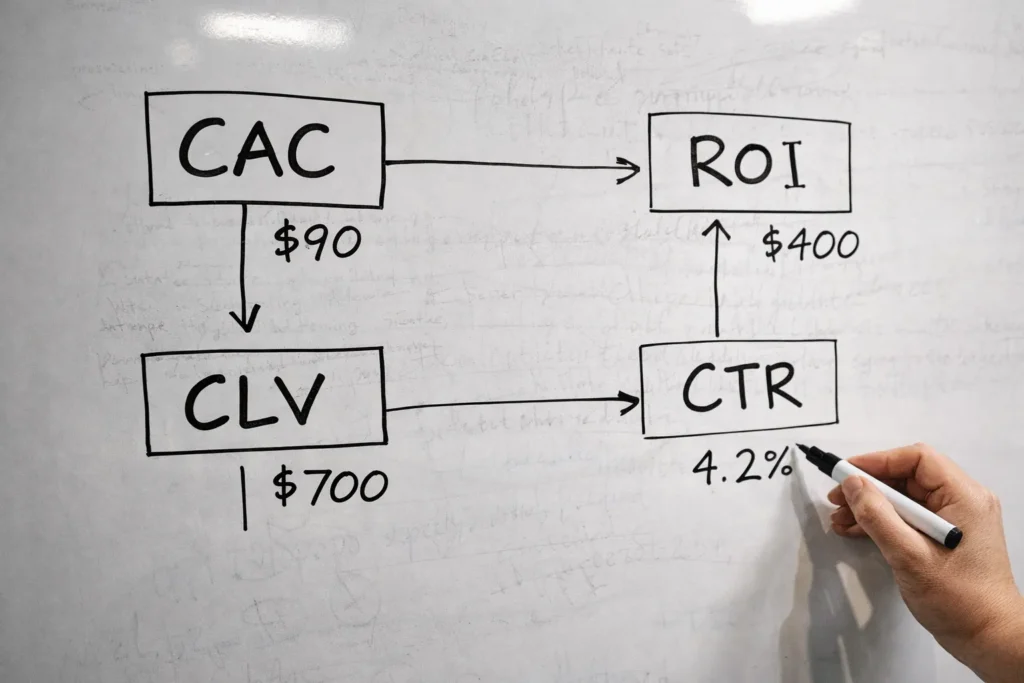
You don't need to monitor dozens of marketing metrics to know if your efforts are working. Focus on these four, and you'll understand where your money goes and what it brings back.
Customer Acquisition Cost vs. Customer Lifetime Value
Customer Acquisition Cost (CAC) shows how much you spend to get one new buyer through all your marketing efforts combined. Customer Lifetime Value (CLV), by contrast, measures how much revenue that same customer brings in over their entire relationship with your business.
For example, if you're spending $100 to acquire customers who only spend $80 total, you're losing $20 on every sale. This gap explains why some businesses stay busy with new customers but never turn a profit.
Return on Investment: Your Bottom-Line Number
Every dollar you put into marketing campaigns should come back with more attached to it. Return on Investment (ROI) tells you exactly how much profit you're making for each dollar spent. Positive ROI means your marketing is generating money, while negative ROI means you're bleeding budget with nothing to show for it.
This number guides decision-making about which marketing channels deserve more investment and which ones need to be cut.
Traffic Sources and Marketing Channels That Convert
If you don't know where your website visitors are coming from, you risk wasting your marketing budget on channels that don't deliver results. After all, traffic volume alone means little if those visitors aren't converting. The channels that create real value aren't the ones sending the most traffic, but the ones bringing in customers who generate revenue.
Click-Through Rate and Bounce Rate Basics
How do you know if your ads are connecting with people? Click-Through Rate (CTR) shows what percentage of viewers actually click through to learn more. A high CTR means your message is working, but if the bounce rate is also high, your landing page isn't delivering what the ad promised. That disconnect reveals where your customer journey breaks down and costs you sales.
Marketing Attribution: Connecting the Customer Journey to Results
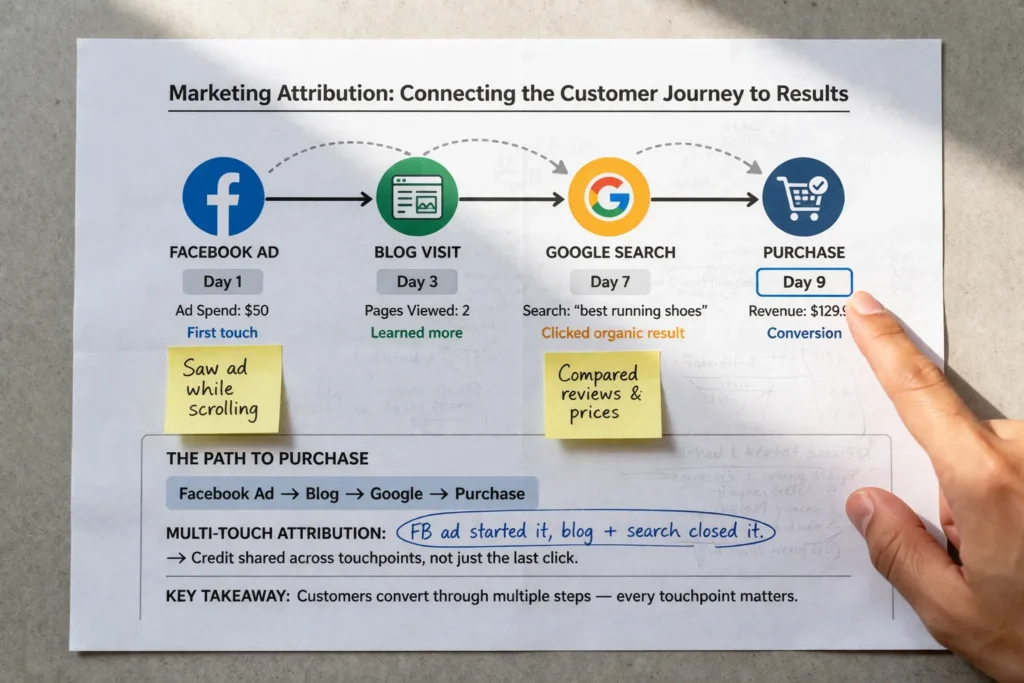
Picture this: someone clicks your Facebook ad on Monday, visits your website on Tuesday, and reads three blog posts on Wednesday. Then they buy on Friday after searching for your brand name. So which marketing channel gets credit for that sale?
Marketing attribution answers that question by tracking which touchpoints in the customer journey contribute to conversions. The challenge is figuring out how to split that credit fairly. Most businesses rely on last-click attribution, which gives full credit to the final interaction before purchase. However, this model ignores the earlier touchpoints that built awareness and interest.
Multi-touch attribution fixes this by distributing credit across all the touchpoints that influenced the sale. When you can see how channels work together, you're less likely to cut budget from efforts that seem ineffective but play an important role in driving conversions.
How to Tell If Your Marketing Is Working
Your marketing works when cost per acquisition drops while customer lifetime value stays steady or climbs. Here are four signs you're on the right track:
- Lead Quality Improves: You get more qualified leads ready to buy, not browsers who waste your time. When your lead-to-customer conversion rate climbs, your campaigns are reaching the right audience.
- Cost Per Customer Drops: If you're spending less to acquire each customer while sales volume stays the same or grows, your marketing efficiency is improving. This means you've identified which channels convert efficiently and cut the ones that don't.
- Repeat Purchases Climb: New customers come back instead of buying once and disappearing, which drives rising customer lifetime value. This shows you're building relationships, not just chasing one-time transactions.
- Data Shows Patterns: Your data reveals which channels are really driving sales and which ones are just burning money. After a while, the pattern becomes clear, instead of looking like random spikes that disappear quickly.
These four indicators show when your marketing is making money, not just keeping you busy.
Using Analytics to Improve Marketing Performance

Checking your marketing data once and forgetting about it won't get results. The real value comes from reviewing your analytics weekly and making small, specific changes.
For example, if Google Analytics shows Facebook ads are costing $150 per customer while Google Ads cost $80, shift more budget to Google. The following week, check your cost per acquisition in your ad platforms. If it improved, the shift worked.
Small adjustments like this, repeated weekly, compound faster than big campaigns built on assumptions. Over time, you'll stop guessing and start using your data to make smarter marketing decisions.
Track the Numbers That Drive Growth, Not Just Vanity
Start by picking two or three metrics from this guide that connect directly to your revenue. Vanity metrics like page views and follower counts look impressive, but don't show whether your marketing is making money. Focus on the numbers that drive real growth: customer acquisition cost, customer lifetime value, and return on investment.
Track these consistently every week. The patterns you spot over time reveal more than any single data point. When tracking becomes routine, you catch problems early and scale what works before wasting more budget.
And if you don't have the time or want the pros to handle it, give us a knock. We'll dig into your data and show you exactly where to put your budget so you stop wasting money and start seeing results.
Comments are closed.