
Why Some Businesses Struggle With Ads Even When They Spend a Lot
You've got the budget. You've launched the ads. But somehow, paid advertising still isn't working.
The truth is, most businesses struggle with PPC campaigns for reasons that have nothing to do with spending more. It's about where that money goes and how your ads actually connect with people who want to buy. The main culprits? Targeting mistakes, poor keyword choices, broken tracking, and campaigns chasing the wrong goals.
In this guide, we’ll cover:
- Why search intent mismatches waste more budget than anything else
- The keyword mistakes that send your ads to the wrong people
- How targeting errors and broken tracking kill your ROI
- What to fix first to stop bleeding money
Let's start with the biggest budget killer: search intent problems.
Search Intent Problems That Burn Your Budget
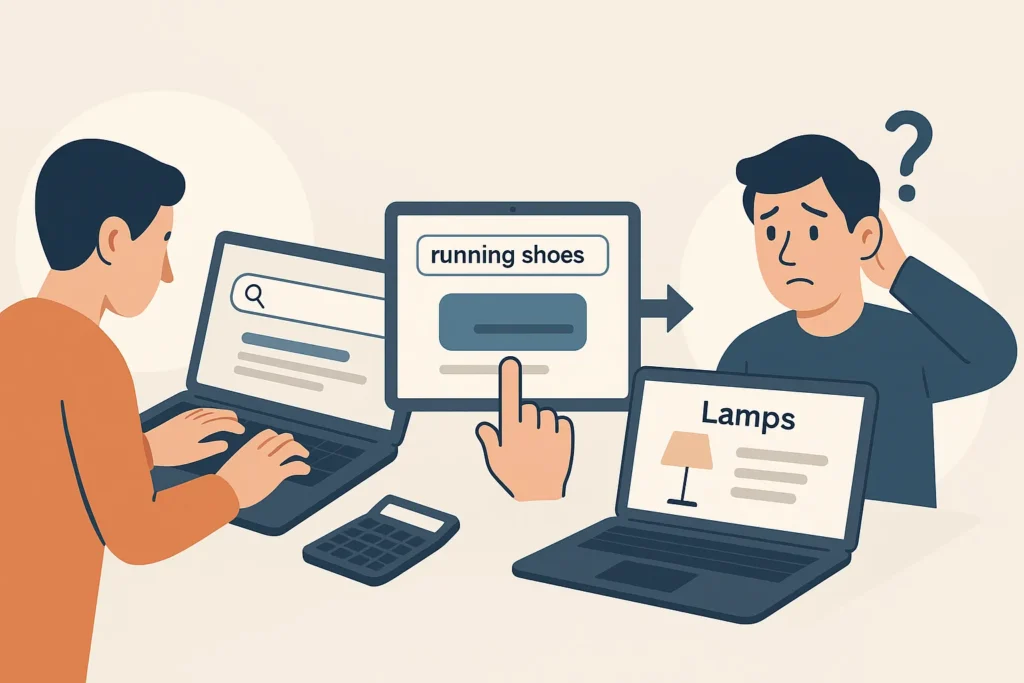
Search intent mismatch happens when the keywords you bid on attract people looking for something different from what you sell. A person searches, sees your ad, and clicks. The moment they reach your page, they realize it is not what they wanted, and they leave instantly.
Many of these visitors are not buyers. They're gathering information, comparing options, or checking out competitors. They click because the keyword matches their question, not because they're ready to purchase.
From what we've seen working with businesses across industries, search intent issues waste more budget than any other single problem.
Generic or high-level keywords make the problem worse by pulling in broad research traffic. These clicks cost just as much as buyer-intent searches, but they rarely convert.
This drains your budget because you are paying for people who were never going to buy. Even worse, those wasted clicks eat up the impression share that should be going to users who actually want what you offer.
Keyword Mistakes: Why Your Ads Reach the Wrong People
Search intent problems often start with how you choose your keywords in the first place. Poor keyword choices can send your ads straight to people who have zero interest in buying what you actually sell (we've all seen retirement homes pay for "aged cheese" clicks). Most of this waste comes down to just two common keyword mistakes.
Broad Match Chaos
Broad match is where Google gets a little too creative. You bid on "LASIK eye surgery," and suddenly your ads are showing for "animal eye surgery" or "eyelash extensions." That's wasted spend right there.
Here's the deal. Keyword match types control how tightly Google sticks to your exact terms. Exact match only shows your ads for searches that match your keyword exactly. Phrase match lets your ads appear for searches that include your keyword phrase.
Broad match casts the widest net. It can sometimes be useful, but it often shows your ads for searches you never intended and can quickly drain your budget.
Missing Negative Keywords
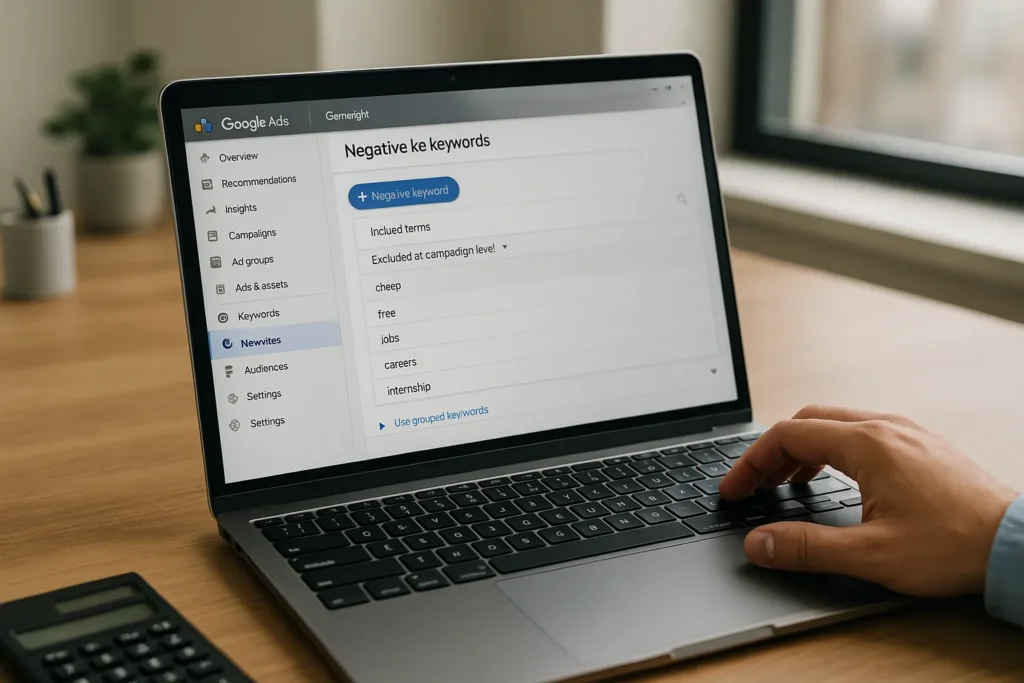
Negative keywords are your best friend when it comes to stopping wasted ad spend. Without them, your ads appear for searches that have little chance of converting. This includes competitor brand names, bargain hunters, or people just researching your product.
Each irrelevant click eats into the budget that should go to buyers who are ready to purchase.
For example, someone typing "YourCompetitor pricing" or "cheap LASIK" sees your ad but is comparison shopping, not buying. A search like "what is LASIK recovery time" triggers your ad while the person is still learning.
Adding these terms as negative keywords prevents your ads from showing for irrelevant searches and keeps your budget focused on people who are ready to buy.
Ad Targeting Errors That Cost You Real Money
Keywords aren't the only way to reach the wrong people. Getting your audience targeting right means every dollar goes toward people who actually want what you offer. Our tests showed that fixing audience settings alone can cut wasted ad spend by 40% or more. But when you've missed the mark on targeting, here's what drains your paid media budget.
- Demographics Too Broad: Your ads reach age groups or income levels that would never buy. A luxury offer pushed to college students looks active on paper, but never turns into sales.
- Wrong Locations: Clicks come from regions you don't serve or areas with very low demand. If most customers come from three states, nationwide delivery pushes spend into places that rarely convert.
- Interests Too Loose: "Fitness enthusiast" could mean yoga lovers, bodybuilders, or someone who bought running shoes once. Broad interest categories pull in curious browsers rather than serious buyers who are ready to purchase your solution.
Loose targeting burns money and buries real buyers under wasted impressions. Tightening these settings puts your budget in front of people who are actually ready to act.
Can Poor Conversion Tracking Kill Your ROI?

Even when you're targeting the right people, you still need to know if your ads are actually working. Yes. If your conversion tracking is broken, you have no idea which ads actually bring in revenue.
Missing conversion tags leave Google Ads guessing which clicks generate sales, and most of your budget could be going to ads that don't produce a single purchase. That makes it easy to think your campaigns are working when they're not.
Sometimes the numbers look good, but they're misleading. Maybe you're counting newsletter signups or free downloads instead of actual purchases. On paper, your campaign is converting, but the cash isn't hitting your account.
And it gets worse when attribution is off. You end up optimizing the wrong metrics and pausing ads that might have been your real performers. Meanwhile, the "stars" in your reports could be nothing but costly distractions. Fix your tracking, and suddenly you know which ads deserve the budget and which ones should be retired.
Landing Pages vs. Ad Copy: The Disconnect
Tracking tells you what's working, but it can't fix what happens after the click. When your ad copy and landing page tell the same story, your conversion rates can more than double.
In fact, a Moz case study found that aligning messaging between your ads and landing pages produced a 212% lift in conversions. But when they don't match, your clicks can cost you money without delivering sales.
For example, an ad might promise a 20% discount on a product. If the landing page shows the regular price instead, it misleads your visitors, and they leave immediately.
Misaligned offers aren't the only problem. Tone mismatches also hurt your results. A fun, casual ad that leads to a corporate, formal landing page makes your visitors question whether they're in the right place. Matching your offer, product, and tone keeps your visitors engaged and helps you convert more of them.
Display Network Traps Most Advertisers Fall Into
Message alignment is important everywhere your ads appear, but some ad placements create problems no amount of good copy can fix. The Google Display Network lets your ads appear on websites, apps, and videos across the internet, not just in search results. Sounds good, but it can quickly eat into your budget.
By default, new campaigns are automatically opted into the display network unless you turn it off. That means your ads can show on sites or apps where users click by accident while scrolling or playing games. You still pay full price, even though these visitors never intended to see your ad.
Because the network spans such a wide range of sites and apps, some placements perform well, but many deliver clicks that rarely convert. Bots and competitors can also rack up clicks without producing real customers.
So, keep a close eye on where your ads appear and adjust placements so your budget goes to people who actually want what you're offering. In our experience, most advertisers don't catch these placement issues until they dig into the reports and see how much budget disappeared on low-quality sites.
When Your Business Goals Don't Match Your Campaign Performance

Platform problems like display network waste are easy to spot once you know what to look for. But the hardest problem to diagnose? You can nail every technical detail and still watch your campaigns flop if they chase the wrong finish line. Even when traffic numbers look great, they don't put money in your pocket.
These three misalignments cause the most damage:
- Clicks Over Sales: Thousands of visitors land on your site, but hardly anyone buys. You need qualified leads or purchases, not empty traffic that bounces after a few seconds.
- Wrong Conversions: Google might optimize for whitepaper downloads when you actually need demo requests. Without objectives tied to real revenue, the platform pushes actions that look good on paper but don't grow your business.
- Awareness When You Need Revenue: Brand campaigns can eat up ad spend during months when cash flow is tight. There's a time for awareness, but not when immediate sales determine whether your business keeps running.
When your campaigns chase vanity metrics instead of real results, you waste time and money. Set goals that actually drive revenue and growth, and let every click count toward your bottom line.
Stop Wasting Budget and Start Seeing Real Returns
Fixing these issues doesn't mean starting from scratch. Most struggling PPC campaigns improve once you identify what's actually broken.
Start with one problem at a time. Tighten your search intent targeting, add negative keywords, or fix your conversion tracking. Small, focused changes in how you run paid media can cut wasted ad spend by half or more.
Your budget deserves better than guesswork and hope. Align your strategies with what actually drives sales so every dollar works harder.
Want to stop wasting your ad budget? Reach out to Oikos Project. We'll pinpoint what's draining your campaigns and help you build a plan that puts your ad spend to work where it counts.
Comments are closed.