
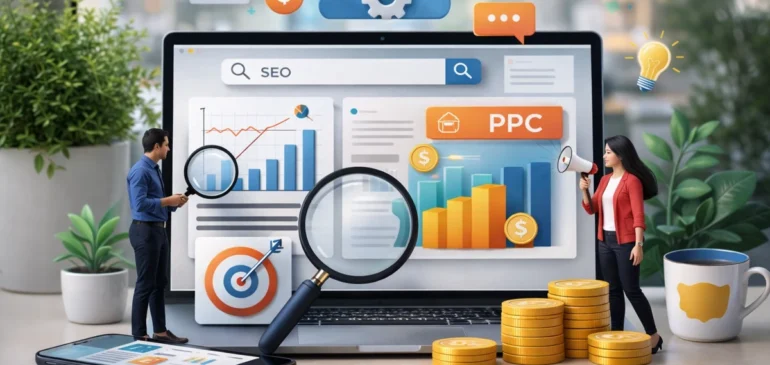
How SEO and Ads Support Each Other Without Competing
Most marketing teams split SEO and PPC into separate budgets and strategies. Their SEO gets handed to one group, and PPC goes to another. But nobody talks about how the data from ads could make your content rank better.
But businesses running both SEO and PPC together usually see a higher click-through rate compared to companies that pick just one channel. It’s because when someone searches for what you sell, you can show up twice on the same page.
In this article, we're breaking down the specific ways SEO and Ad channels feed each other. You'll learn which PPC metrics tell you what content to write, and how organic rankings can cut your paid spend in half.
So let’s see how going for both strategies can give you better results than your competitors.
SEO vs PPC: Different Strengths Working Toward One Goal
SEO is a long-term investment that builds authority and sustainable traffic over time, while PPC is a paid shortcut that gives you immediate visibility and clicks.
To give you a clearer idea, Google generated $264.5 billion in ad revenue in 2023, which proves that businesses see value in paid search when done right.
Look at the differences between these two:
| SEO | PPC |
| Takes 3-6 months to see results | Results within hours |
| No cost per click | Pay for every click |
| Builds long-term credibility | Instant visibility |
| Rankings can last for years | Stops when the budget runs out |
Basically, SEO takes time but costs nothing per click. And the other may cost money, but it puts you at the top of searches.
Why You Need SEO PPC Synergy
You need both because combining SEO and PPC protects your traffic, reduces risk, and keeps leads coming even when one channel drops. In fact, HubSpot's 2024 research found that website, blog, and SEO efforts were the top ROI driver for B2B brands, which shows organic's long-term value
Here's what makes them powerful as a pair: Paid ads let you test which offers actually convert before you commit months to building content around them. Along with that, when your brand shows up in both the organic listings and the paid ads for the same search, it increases your brand's visibility.
This makes searchers way more likely to click on your site instead of scrolling past to a competitor. If they see your name twice, they usually think, "these people must be legit."
You won't have to wait around for rankings while losing customers to competitors who are advertising. Plus, you're not burning through your budget on ads for keywords when you could be ranking organically.
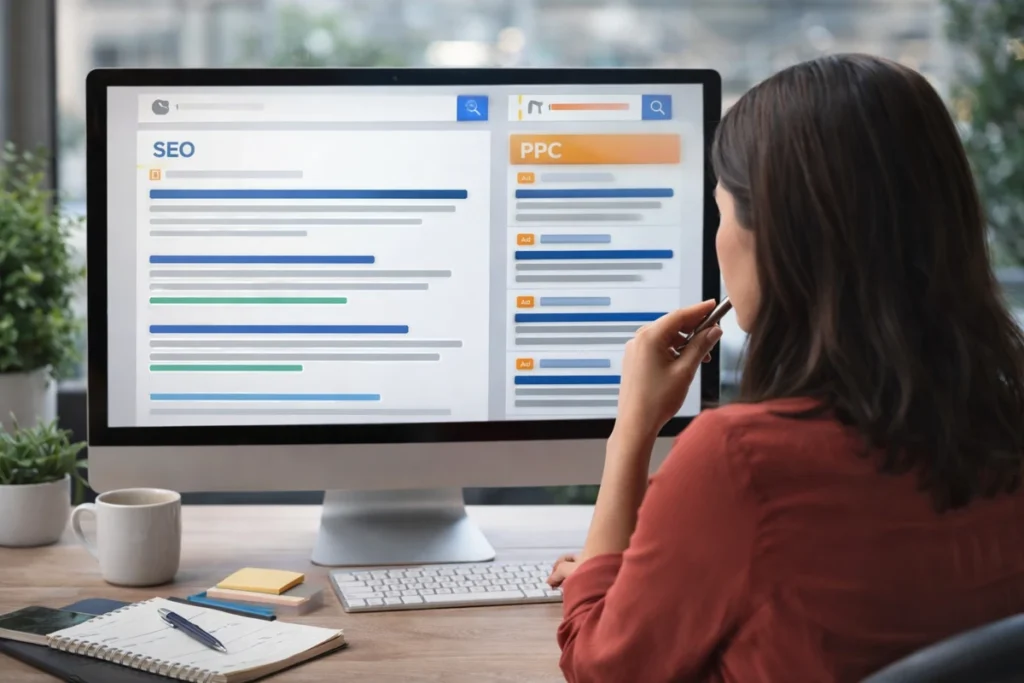
Relying on One Channel Is a Risk
Companies that split their marketing efforts between SEO and PPC do way better, because running both means you never depend on one source alone.
Take a look at why it could be risky to go for only one strategy:
- Protection From Updates: Google changes its algorithm constantly, and that can wipe out months of work overnight. But paid traffic keeps everything flowing while you rebuild organic rankings. We’ve seen companies using only SEO have lost even half their revenue after one update.
- Reaching Different Mindsets: Buyers looking for quick answers click ads, while researchers who take their time prefer organic listings because they trust them more. When you only opt for one option, you lose one group of potential customers.
In the end, long-term growth comes from dominating search results top to bottom, not just claiming one position and hoping it's enough. So, both strategies fill the gaps the other one leaves open.
Sharing Keywords Between Paid and Organic Search
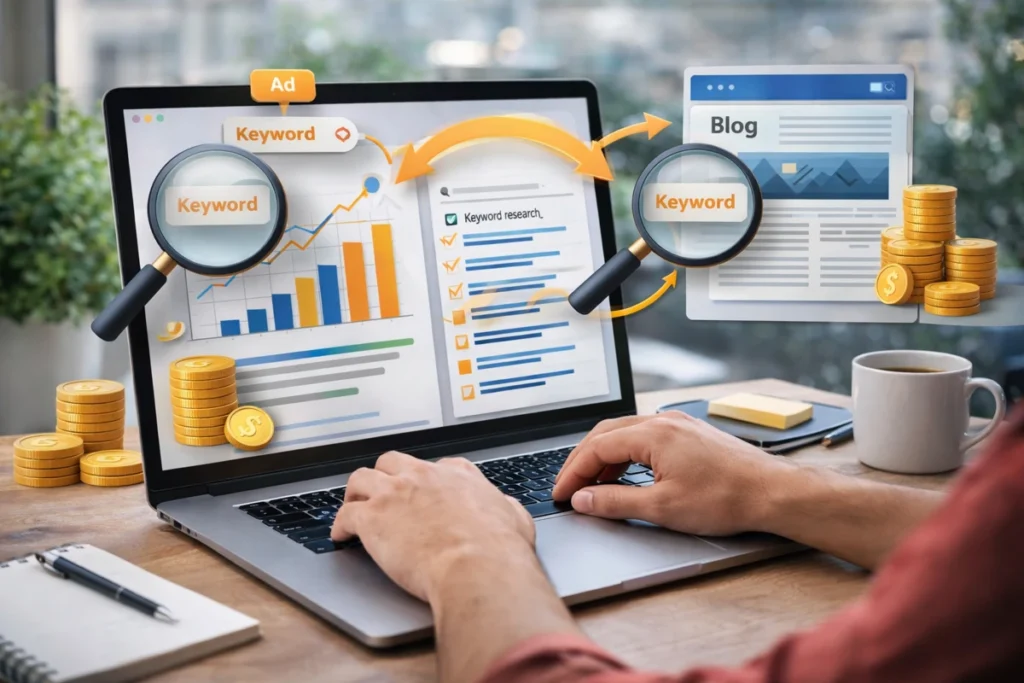
Once you see what's working in your ads, creating content becomes easy. PPC data shows you which search terms bring in customers who buy. When you share this information between channels, your marketing budget doesn’t get wasted.
Here’s how sharing keywords can be more efficient.
Using PPC Performance for Your Content Strategy
Keywords that show high conversion rates in your ads deserve their own blog posts and landing pages. Because you already know people want a specific product or service, because they're clicking and buying.
For example, someone searching "best project management software" wants something different from someone looking for "how to manage projects." Your PPC can already sort this out, so you simply use it when planning your content strategy.
It gets even better when low-cost clicks in PPC reveal topics your competitors haven't covered yet. These are gaps in the market that you can use to your benefit. When a keyword costs $0.50 per click instead of $5, that usually means nobody's fighting for it yet.
How Organic Rankings Lower Your Ad Costs
Strong organic rankings for branded terms give you the freedom to reduce or even pause paid brand campaigns altogether. If you already rank #1 for your company name, paying for those clicks adds little value. And that budget is far better invested in keywords where organic visibility is still growing.
After running combined SEO and PPC campaigns for several years, one pattern keeps repeating: when long-tail and research queries are covered by organic search, paid ads can focus solely on high-value commercial terms. Basically, organic ranking handles discovery, while ads drive conversions.
There’s also a lesser-known advantage. Landing pages that already rank well usually earn higher Quality Scores in Google Ads, and Google rewards that relevance with lower cost-per-click. Meaning your SEO efforts actively make your paid campaigns cheaper to run by bringing in free traffic.
Now that you see how keywords flow between channels, let's talk about what else they share.
How Continuous Feedback Loops Work
Continuous feedback loops learn from each other by sharing real-time data. It sharpens targeting, improves performance, and accelerates results for both channels.
These loops between SEO and PPC create data-driven insights. So when marketing teams actually talk to each other, the results compound fast.
This is how the loop works.
Testing Ad Copy Before Writing Meta Descriptions
Ad copy can act as a proving ground before you refine on-page elements. By running a few ad variations, you can see which headlines earn the strongest click-through rates before revising title tags or meta descriptions.
The same applies to calls-to-action. Phrases that consistently perform well in ads often translate into stronger meta descriptions and page headers.
Audience targeting also adds another layer of insight. Your campaign data shows which demographics respond to specific messaging styles. That makes it easier to build content around users who convert, rather than assumptions about who might be reading.
Pro Tip: Run three ad variations to find which headlines get the most clicks before updating titles. Say, testing different options like “Get Your Free Quote” versus “Start Your Project Today” in paid campaigns. And the winner becomes your meta description.

Maintaining Brand Harmony Across Landing Pages
Your organic snippets and paid ads should use similar language to avoid confusing searchers. For instance, when someone sees "affordable web design" in your ad but "premium website services" in your organic listing, they begin to wonder if you're the same company.
Which is why promotions advertised in PPC need matching content on pages that people find through organic search.
Plus, visual consistency in display ads and website design reinforces this recognition across customer touchpoints. Speaking from our observation, people remember brands that look and sound the same everywhere they appear.
Fire Up Both Engines Today
The bottom line is that businesses sitting on the fence between SEO and PPC are leaving half their potential customers to competitors who run both. All the companies dominating search results are usually using each channel to make the other one stronger.
So start with picking your three best-performing PPC keywords and creating blog content around them. Maybe take your top-ranking organic pages and run ads to boost their visibility. You won’t need a massive marketing budget or a complete strategy overhaul to see results. The shared goals between your marketing strategies are more effective than the individual tactics.
For more information, Oikos Project have helped businesses cut ad costs while growing organic traffic. Visit us if you need help building a combined search strategy.
Comments are closed.