

How Businesses Can Improve Google Ads Performance With Better Campaign Structure
Businesses improve Google Ads performance by building campaigns around tight themes, with ad copy and landing pages that match each one. That habit affects how far each dollar goes before someone clicks, calls, or fills in a form.
Yet many accounts grow by accident. New keywords pile into old themes until the account has no clear focus. At Oikos Project, we see this pattern in service businesses, online stores, and local shops that want cheaper leads.
This guide covers structural fixes that boost relevance, checks that keep your budget on track, and signs it may be time to bring in outside help. Without further delay, let's start with the foundations.
Your PPC Campaign Structure Sets the Ceiling on Google Ads Performance

In many of the accounts we audit, wasted spend traces back to setup before it traces back to bidding. An account built on loose themes makes the auction guess what you sell. Eventually, guessing wastes budget.
Google's Economic Impact report suggests that Google Ads can deliver a solid return on ad spend. Poor account structure tends to work against that potential, since the auction needs clear signals about what you offer. Look, account setup issues are common, and they often surface before any bidding concerns come into view.
Three setup mistakes cause most of that waste, and the first two are quick to fix.
Common Mistakes That Drain Ad Campaigns
A catch-all ad group tops the list, especially one full of broad match keywords. A single ad then has to answer dozens of unrelated searches.
Duplicate keywords come next. They split your performance data across ad groups, and Google may serve the weaker ad.
Smart bidding needs conversion data to learn which clicks become phone calls or booked jobs. Set up conversion tracking before you pick a bidding strategy.
How Tight Ad Groups Raise Quality Scores and Click-Through Rates
Tight ad groups work by closely aligning your keywords, ad copy, and landing page around a single theme. That alignment signals relevance to Google, which raises your quality score and improves your click-through rate together.
Worth knowing: keeping five to 15 closely related keywords per ad group gives Google enough search data to evaluate your ads while keeping each group focused on one clear theme.
Higher relevance also lowers your cost per click. Every dollar then goes further on the searches most valuable to your campaigns.
Why Keyword Research and Match Types Come First.
Your keyword list determines how many themes you need. Match types control how far Google can stray from those words.
We sort terms by intent first, separating "emergency plumber Denver" from "plumber salary". After that, we build the account around those clusters.
Research comes first because every later choice depends on the keyword list.
Building a Google Ads Strategy That Connects Every Layer of Paid Search

With the structure in place, a connected strategy lowers your cost per click and lifts conversion rates. Every layer below the keyword has to repeat the same promise.
Work through the three connection points below in order. Each one depends on the one before it.
Matching Ad Copy and Landing Pages to Each Ad Group
Your ad should echo the searcher's words. The landing page should repeat that offer in the first screen.
Sending three themes to one generic homepage wastes a good ad campaign (homepages answer nobody in particular). If the page collects form data, add a privacy policy link, because Google can disapprove ads that point to pages without one.
One client split a single page into four, matched each headline to its ad, and watched conversion rates climb.
How Negative Keywords Block Wasted Clicks
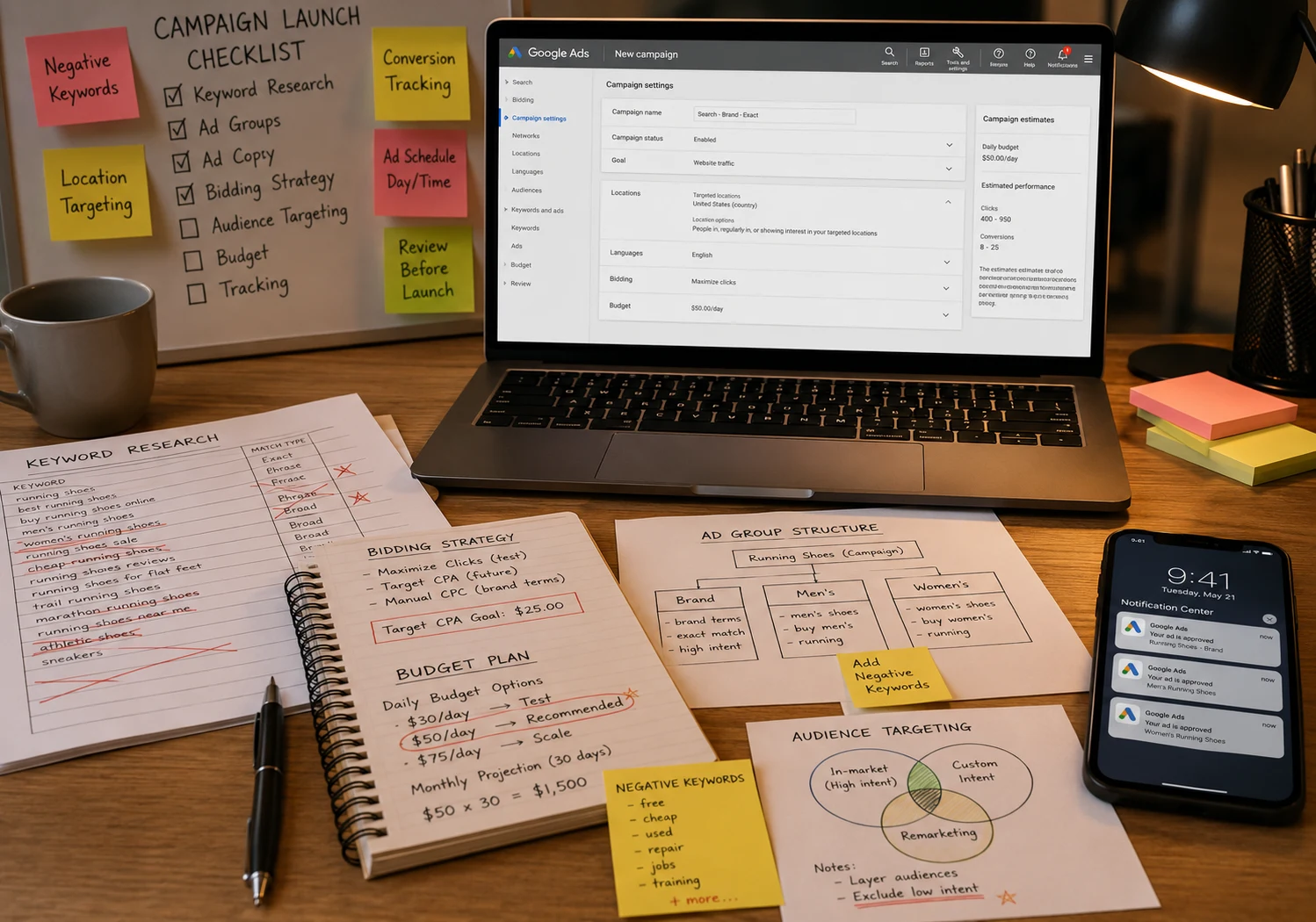
Negative keyword management blocks searches that look related but never buy, like "free," "jobs," or "DIY."
Check the search terms report weekly for a month, then monthly. Add every irrelevant term to shared negative keyword lists.
In the accounts we audit, weekly search term checks have cut wasted spend more than any bid change in the same quarter.
Google Ads Budget Rules That Follow Campaign Priorities
Fund proven demand first. Brand and high-intent Google Search Ads get paid before you test Performance Max or Shopping.
One simple rule works well: "DIY" and a fixed cap before you judge them. Bid management can wait until the data arrives.
Move money toward whatever produces qualified leads at your target cost. Target ROAS bidding works only once conversions are tracked cleanly.
When Should a Business Bring In a Google Ads Agency?

A business should bring in a Google Ads agency when account complexity outgrows the time and skill you have in house. That point usually arrives when a second campaign type joins a working search setup.
Usually it lands when a second campaign type joins a working search setup. Running Google Shopping, YouTube ads, and search together means three sets of rules, three creative formats, and three reporting habits.
By contrast, a business with one tidy search campaign and steady leads rarely needs PPC management. Older guides still call it Google AdWords management, though Google retired the AdWords name in 2018. Good Google Ads management earns its fee through structure work, testing, and data you would not have gathered alone. Ask what an agency changes in month one, and keep looking if the answer skips structure.
Bottom line: if nobody spends at least four focused hours a month in the account, campaign performance will drift.
Should You Manage Google Ads In-House or Hire an Agency?
Plenty of businesses pay for monthly help that a cleaner account would have made unnecessary. Company size matters less than how paid search fits with your SEO and the rest of your digital marketing.
Answer these three questions before you shop for PPC services (the honest answer changes as you grow).
| Question | Points to in-house | Points to an agency |
|---|---|---|
| Who reviews search terms weekly? | A named person | Nobody |
| How many campaign types run? | One or two | Three or more |
| What would a bad month cost? | Under $2,500 | $2,500 or more |
Two or three agency answers mean the account needs outside help. With only one, keeping management in house for another quarter is reasonable.
Put a Stronger Structure Behind Your Ad Spend
Structure affects every other lever, from bidding to creative testing. Fix the themes, tighten the copy, and match the pages, and bidding and testing will have cleaner data to work with.
Pick one campaign this week. Split it by theme, then add the negative keywords your search terms report demands. You will notice the change in cost per click long before it shows up in revenue.
Oikos Project builds Google Ads management programs for businesses that want clear structure behind their ad spend. Contact the Oikos Project team for a free account audit and a plan your budget can stand behind.
Comments are closed.